
Chapter 1. A Style Conversation Begins
Gabrielle and Hayley did not develop their sense of style at the same pace.They had known each other for years,yet fashion was rarely the subject of their conversations.It wasn’t until a casual discussion about accessories turned unexpectedly detailed that they realized how differently they viewed the role of a bag within personal style.
Gabrielle saw dressing as an ongoing process rather than a final statement.She focused on how clothing interacted with each other,how layers were arranged, and how colors shifted throughout the day.Fixed definitions and labels didn’t concern her.What mattered most was how each piece came together to form a coherent whole.
Hayley, on the other hand,placed importance on clarity.She thought in terms of structure and proportion,often visualizing an outfit before putting it together.Every item needed a distinct purpose.Randomness felt distracting to her,even when the result appeared laid-back.
Their differing approaches didn’t lead to disagreement but rather sparked curiosity.As their conversation unfolded,it became clear that the way each of them viewed a bag revealed far more about their style philosophy than any single outfit ever could.
Chapter 2. Gabrielle’s Perspective on Modern Dressing
For Gabrielle, a bag is never considered in isolation.She begins with the overall direction of an outfit—its pace,its layers,and the way it responds to movement.Only after that does she think about how a bag fits into the picture.
She believes modern dressing is about creating a cohesive look,not focusing on individual items.A bag should complement the rest of the outfit,not disrupt it. Its role should be purposeful without drawing too much attention.
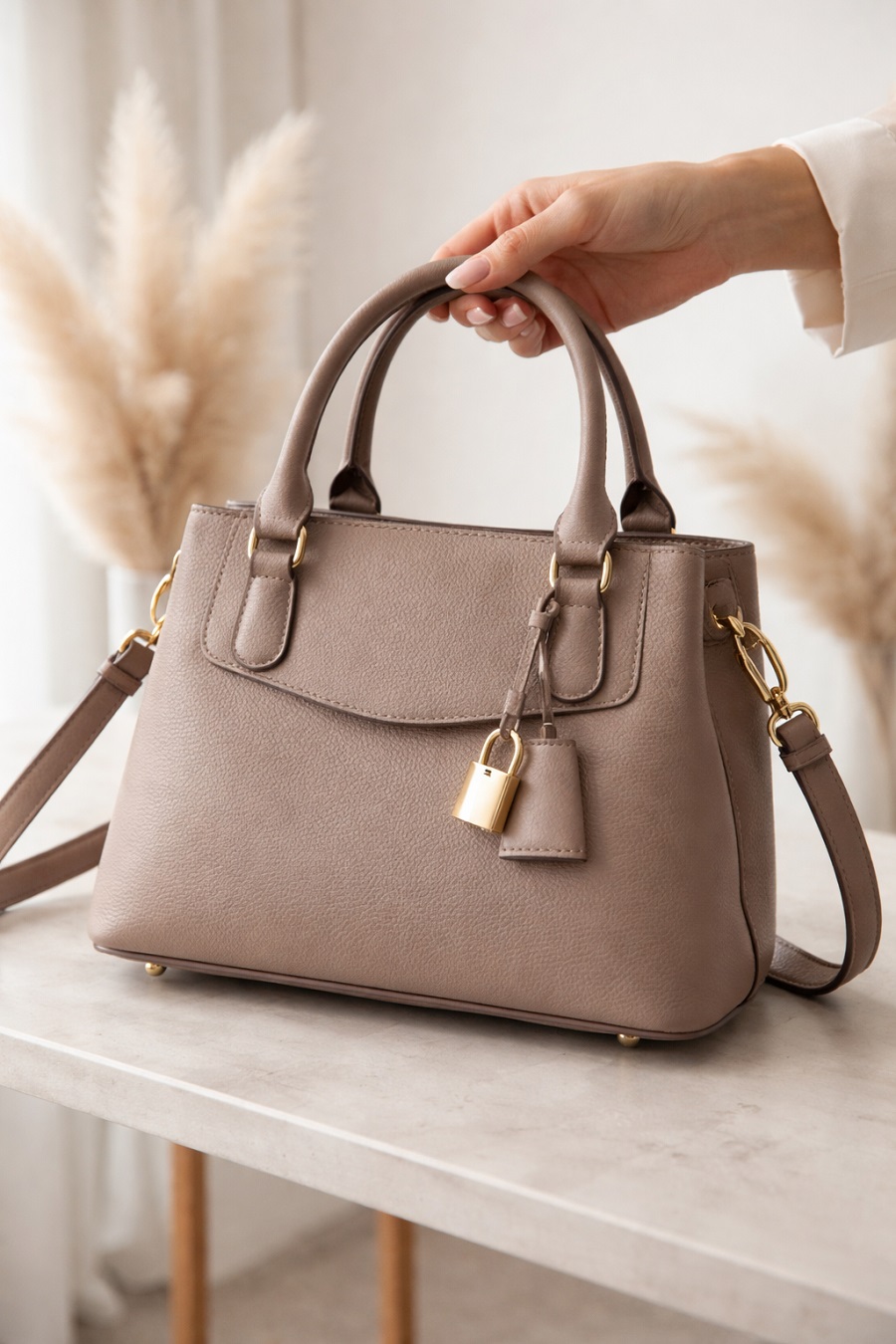
In this setting,a bag for women was never judged independently.It needed to align with the surrounding pieces,reinforcing the intended style direction.When that alignment felt seamless,the bag became part of the visual flow,contributing without standing apart.
Hayley viewed the same elements through a more disciplined lens.She preferred a controlled and consistent aesthetic.Materials and accessories had to work together to enhance the clarity of the outfit.If something disrupted the flow,it felt out of place,no matter how appealing it might seem on its own.
Despite their differences,both understood the weight of these decisions.They affected not only how a bag was seen but how it contributed to the overall impression of the outfit.
Chapter 3. Hayley and the Idea of Visual Structure
Hayley’s approach to style begins with structure.She views dressing as a process of organizing visual elements into a coherent framework.Before adding anything to an outfit,she thinks about proportion,placement,and balance.
In her view,a bag serves as an anchor.It provides stability to the overall look,grounding it rather than transforming it.Size,position,and alignment are more important to her than versatility or changeability.
She carefully adjusts each element,ensuring nothing feels out of place.Her goal is not to appear rigid but to create a sense of order that feels effortless once completed.
Unlike Gabrielle,Hayley does not seek variation through reinterpretation.She values consistency,believing that clarity enhances personal style.A well-chosen bag,to her,helps reinforce that clarity rather than competing with it.
These contrasting views set the stage for deeper discussions ahead—two ways of thinking,neither opposing,yet fundamentally different in how they shape style expression.
Chapter 4. When Accessories Shape the Narrative
As their conversations deepened,Gabrielle and Hayley began to notice how often a bag influenced the direction of an entire look,even when it wasn’t meant to stand out.What started as a simple exchange of opinions gradually turned into a broader discussion about visual storytelling.
Gabrielle argued that accessories subtly guide perception.Even when understated,they affect how an outfit is read from a distance.A shift in proportion or placement can change the mood entirely.In her view,a bag for women does not announce itself—it redirects attention through context.
Hayley acknowledged the effect but framed it differently.To her,the narrative was shaped by control rather than suggestion.She believed that when every element is placed with intention,the story becomes clear without ambiguity.The bag’s role was to support that clarity,not reinterpret it.
Their discussion wasn’t about right or wrong.It was about emphasis.Gabrielle leaned toward fluid interpretation,while Hayley favored visual certainty.Both agreed on one thing:the bag,whether noticed or not,often determined how the rest of the outfit was understood.
Chapter 5. The Role of Material and Surface Choices
When the discussion turned to material and surface qualities,the contrast between Gabrielle and Hayley became even clearer.Gabrielle described these elements as something felt before being consciously noticed, influencing how an outfit was experienced rather than analyzed.
She focused on how different surfaces interacted with clothing as a whole.The way a bag responded during movement,or how it sat against fabric,affected the overall mood of the look.For her,these details helped maintain continuity without drawing focus away from the wearer.
In this setting,a bag for women was never judged on its own.Its surface needed to align with the surrounding garments,reinforcing the intended direction without interrupting it.When that alignment felt right,the bag blended into the larger visual flow rather than standing apart from it.
Hayley viewed the same elements through a more controlled lens.She valued consistency and restraint,preferring materials that reinforced clarity and order.If a surface disrupted the visual structure she had established,it felt out of place,regardless of how interesting it might be on its own.
Despite their differing views,both understood that these choices carried weight.They influenced not only how a bag was seen,but how it contributed to the overall impression of the outfit.
Chapter 6. A Shared Look,Two Interpretations
At one point,they challenged themselves with a simple exercise:imagining the same outfit styled in two different ways.The clothing remained unchanged,yet their interpretations immediately diverged.
Gabrielle imagined slight variation.She adjusted how elements interacted,allowing contrast to emerge through movement and spacing.Her version felt open-ended,as if it could evolve throughout the day.
Hayley envisioned precision.She refined proportions,ensuring that every component aligned seamlessly.Nothing felt unresolved.Her interpretation was stable,deliberate,and composed.
What surprised them was how distinctly these interpretations communicated personality.The same foundation led to two outcomes,neither overpowering the other.It reinforced their shared understanding that personal style is shaped less by individual items and more by the principles guiding their use.
This realization set the stage for a deeper exploration of wardrobe identity—one that would move beyond individual looks and into long-term expression.
Chapter 7. Building a Personal Wardrobe Language
As their conversations evolved,Gabrielle and Hayley realized that the discussion was no longer about individual outfits.It had shifted toward something more fundamental:the idea of a personal wardrobe language.
Gabrielle described wardrobe language as a collection of visual habits built over time.It wasn’t about consistency in appearance,but consistency in intention.She believed that each addition to a wardrobe should reinforce how someone wants to feel when getting dressed,not just how they want to look.
In this context,a bag for women became a defining element rather than an accessory chosen at random.Its role was to echo the wearer’s priorities—movement,flexibility,or restraint—without overpowering the rest of the look.
Hayley approached the idea from a more structural angle.For her,wardrobe language was created through repetition and refinement.She valued a clear visual identity,one that became recognizable through subtle consistency rather than variation.
Though their interpretations differed,they agreed on one point: when a bag aligns with a personal wardrobe language, it stops feeling optional.It becomes an integral part of how style is communicated.
Chapter 8. Moving Beyond Trends
Neither Gabrielle nor Hayley showed much interest in chasing trends.Their focus remained firmly on longevity—not in terms of durability,but relevance to personal expression.
Gabrielle felt that trends often distract from self-awareness.When dressing becomes reactive,it loses its connection to identity.She preferred observing shifts from a distance,selectively incorporating elements that aligned with her existing visual rhythm.
Hayley shared this sentiment but framed it differently.To her,trends blurred structure.Too many external influences weakened the clarity she worked to maintain.She believed that a strong style foundation allowed trends to pass without disruption.
Their shared distance from trend cycles reinforced an important idea:style gains strength when it is internally driven.The more clearly someone understands their own visual language,the less they feel compelled to follow external signals.
Chapter 9. Subtle Statements Without Excess
As their dialogue continued,restraint became a recurring theme.Both women valued subtlety,though they expressed it in different ways.
Gabrielle saw restraint as space.She appreciated moments where nothing demanded attention,allowing the overall look to breathe.In her view,understated choices often created the strongest impressions because they invited closer observation.
Hayley interpreted restraint as precision.For her,removing excess was a deliberate act.Each element left behind needed justification.The result was a composition where nothing competed for focus,and everything felt intentional.
What united them was the belief that impact does not require excess.A well-considered wardrobe speaks through confidence rather than volume,through clarity rather than accumulation.
This shared understanding prepared them for the final phase of their discussion—how style evolves without losing its core.
Chapter 10. Style as a Personal Rhythm
By the time Gabrielle and Hayley reached this point in their discussion,the focus had shifted inward.Style was no longer something to be evaluated from the outside;it had become a reflection of personal rhythm.
Gabrielle spoke about rhythm as an internal guide.Some days called for movement and openness,others for restraint and focus.Her wardrobe adapted to these shifts,not by constant change,but through flexibility within familiar elements. In that rhythm,a bag for women functioned as a steady companion—present without pressure,responsive without insistence.
Hayley described rhythm differently.For her,it was consistency over time.She valued knowing what worked and returning to it with intention.Rather than adapting daily,she refined gradually,letting repetition strengthen confidence.
Despite their differences,both women recognized that rhythm brings ease.When style aligns with how someone naturally moves through the world,decisions become simpler,and expression becomes clearer.
Chapter 11. An Ongoing Dialogue
Their conversation did not end with a final agreement.There was no attempt to define a single direction or establish shared rules.Instead,what remained was a clearer understanding of personal intention.
Gabrielle and Hayley parted with a renewed sense of confidence in their own perspectives.Each had articulated her approach more clearly,not by comparison,but through reflection.
Style,they realized,is not something to resolve.It evolves through attention,repetition,and subtle adjustment.What matters is staying aware of how choices align with personal rhythm and visual clarity.
The dialogue they shared would continue—sometimes in words,sometimes silently through the way they dressed.And within that ongoing exchange,expression remained fluid,intentional,and unmistakably personal.
